
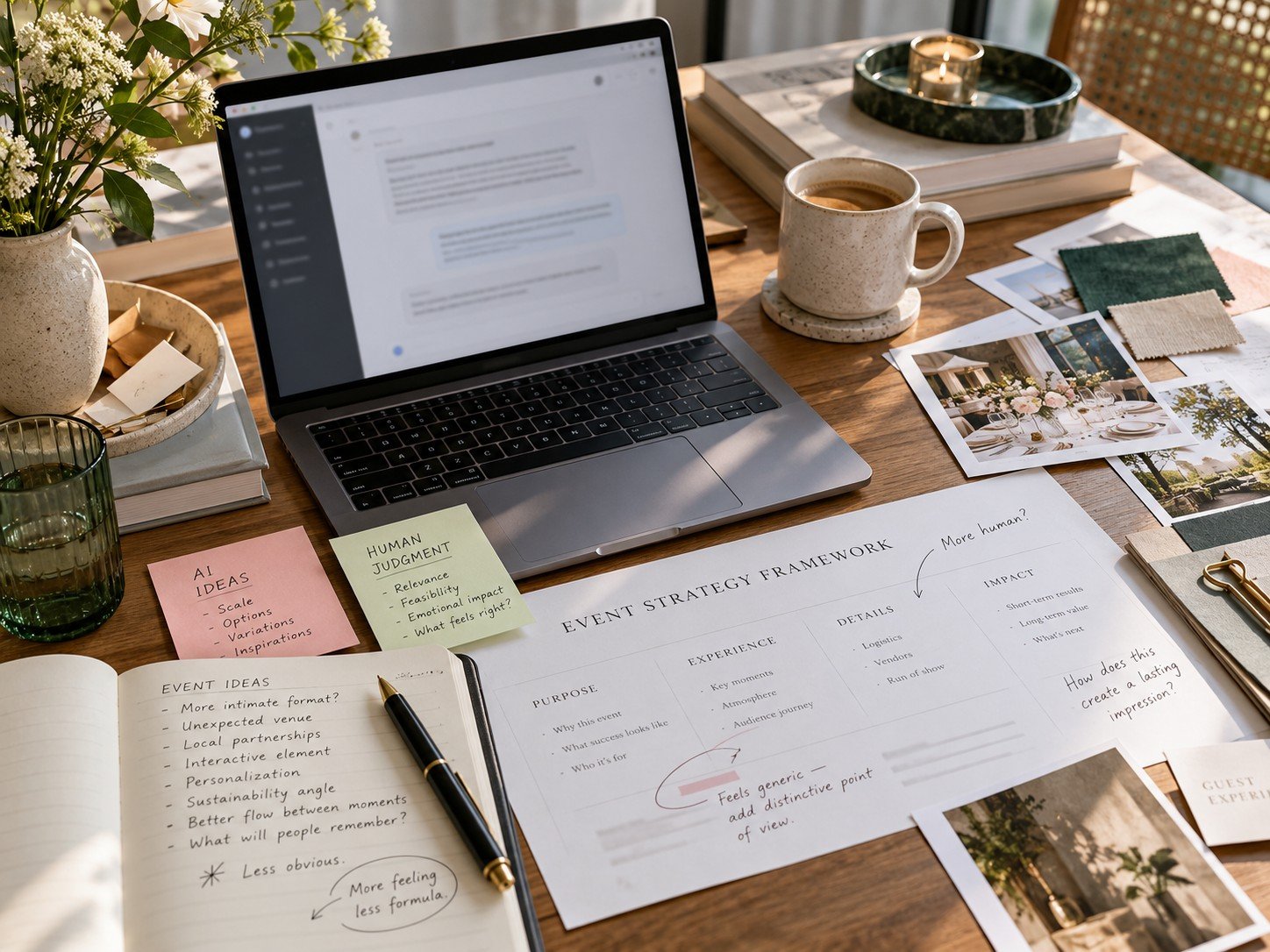
I was scrolling through my feed and saw another event consultant discussing their thoughts on the direction of the industry and sharing a framework that they provide.
It stopped my scroll because the content was nearly identical to ideas that AI has pitched to me. Almost word for word.
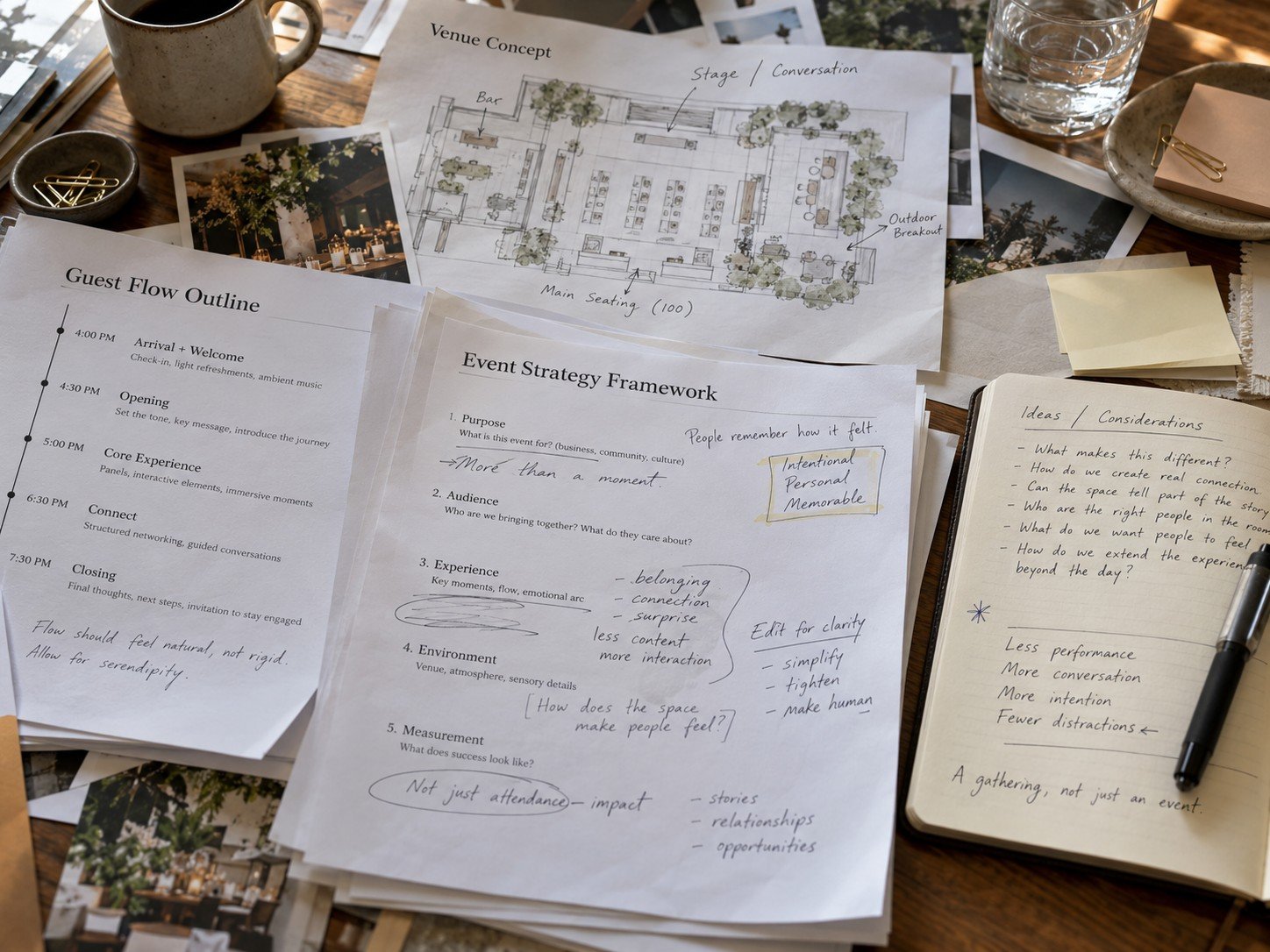
My concern isn’t that event strategists are using AI as a tool and resource for their business. I do too. (These images are AI generated). Nor is it concerning that we can expect to see similar results when it comes to trends, advice, etc. That’s reasonable and honestly expected.
My concern is that if we rely too heavily on our AI tools, we start to dilute the human discernment, human experience, and individual perspective that create the value of event strategy.
I think that’s especially important for those of us selling advice.
What experience brings to the answer
There’s a lot AI can tell me about events. It can pull together trends, suggest approaches, point out considerations I may have missed, or give me a starting place when I’m working through something.
But I shouldn’t be able to copy that answer, clean it up, and call that the value I bring to a client.
My experience should change the answer.
What I’ve seen work should change it. What I’ve seen go wrong should change it. Knowing that something sounds much better in a strategy deck than it feels when you actually put people into the experience should change it.
And sometimes I should disagree entirely.
If all of us are working from the same pool of information and letting the same tools tell us what the “best” approach is, at some point our expertise starts to become interchangeable. That’s what concerns me.
It’s our responsibility as strategists to, yes, keep up with trends and the market. But we also need to create value beyond what can be scraped from the internet.

There’s another layer to this that I don’t think is discussed enough either.
Where the recommended strategy comes from
Many of these AI tools are synthesizing information already available online. In our industry, that information often exists because someone else shared it. Someone developed the framework. Someone wrote the article. Someone spent years doing the work and decided to put what they learned out into the world.
So how much of the recommended “strategy” we receive from AI is actually built from the work and value other people in our industry have already shared?
I don’t know exactly where that line is. I’m not suggesting that every idea AI gives us belongs to somebody else, or that similar thinking automatically means something has been copied.
But I do think it gives us a responsibility to question what we’re being handed before we turn around and position it as our own expertise.
There’s no ill will toward the creator whose post started this train of thought or the business they’re building. We’re all doing what we can with the tools that we have.
What we owe the people we advise
But there is a difference between doing what we can and doing the best we can.
And I caution sacrificing the best, and even the good, for just doing.
As business operators, especially when our work puts us in a position to advise our peers, I think we owe people more than that.
We owe them the experience, judgment, and thinking they actually hired us for.
And in doing that, we protect some of the integrity and value of the industry too.
About the author
Madeline Narlock is the founder of Nightshift Planning Co., an Event + Experience Consultancy for businesses. She brings more than a decade of experience in events, hospitality, and experiential marketing.
Back to Ideas